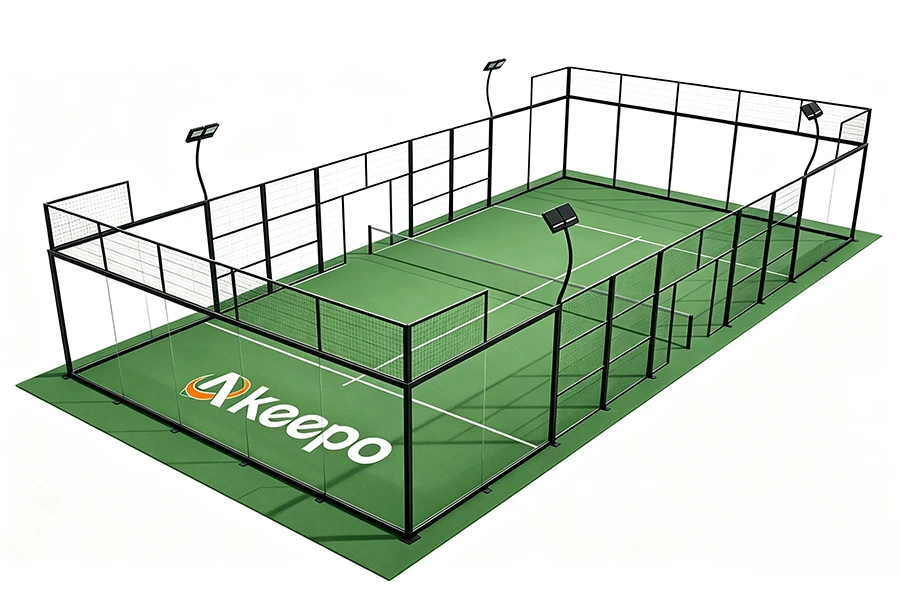
How to Choose the Best Artificial Turf for a Padel Court
Choosing the right artificial turf is one of the most important decisions when building a high-quality padel court. The playing surface affects ball bounce, playing speed, player movement, durability, and long-term maintenance costs. For sports clubs, hotels, developers, and private court owners, selecting the right turf can make a significant difference to the overall playing experience.
At Akeepo, we understand that every padel project has different requirements. Whether you are planning a new sports facility, upgrading an existing court, or developing a premium padel club, this guide will help you understand the key factors to consider when choosing the best padel court artificial turf.
1. Why Is Artificial Turf Important for a Padel Court?
Artificial turf is widely used for padel courts because it can provide consistent playing characteristics, controlled traction, and manageable maintenance when properly specified and installed.
Unlike decorative artificial grass, padel-specific turf is designed to accommodate frequent changes of direction, acceleration, lateral movement, and repeated ball contact.
The right surface can help provide:
-
Consistent ball bounce: Suitable turf and infill help maintain predictable ball response.
-
Reliable player movement: The surface should provide an appropriate balance between grip and controlled sliding.
-
Durability: Turf quality, installation, usage intensity, and maintenance all influence its service life.
-
Efficient maintenance: A suitable system can simplify brushing, sand redistribution, and routine cleaning.
-
A professional appearance: The right turf colour and finish can complement the overall court design.
When comparing different products, buyers should evaluate the complete turf system rather than choosing based on price or appearance alone.
2. Understand the Main Types of Padel Court Artificial Turf
Not all artificial grass is suitable for padel. Turf systems differ in fiber structure, pile height, density, backing, and infill requirements.
Monofilament Turf
Monofilament turf uses individual synthetic fibers. Depending on its design and specifications, it can offer a clean appearance and consistent playing characteristics.
It is worth considering for commercial clubs and facilities that prioritize regular use, surface stability, and a professional finish.
Textured or Curled Fiber Turf
Textured fibers are designed to improve the interaction between the fibers and infill material. Depending on the product design, they may help support fiber resilience and sand retention.
The most suitable option depends on the turf's technical specifications, intended use, and the manufacturer's installation recommendations.
Fibrillated Turf
Fibrillated turf uses fibers that split into smaller strands, creating a network-like structure. It may be suitable for certain projects depending on the product's performance characteristics and budget.
Before selecting a turf type, request a technical datasheet and compare the fiber structure, density, backing, and recommended infill.
3. Choose the Right Pile Height
Pile height is one of the first specifications buyers notice when comparing padel court artificial turf. It refers to the height of the turf fibers above the backing.
Commercial padel turf is commonly available in configurations around 10–12 mm, although the appropriate specification depends on the complete turf system.
A shorter pile may create a firmer playing feel, while a different fiber structure or infill configuration can change the surface response. However, pile height alone does not determine ball speed, comfort, or durability.
When evaluating pile height, consider:
-
The expected level of play, from recreational to competitive.
-
The preferred playing characteristics.
-
Fiber type and yarn weight.
-
Stitch density and backing construction.
-
Compatibility with the recommended sand infill.
-
The manufacturer's installation and maintenance instructions.
At Akeepo, we recommend comparing complete product specifications and intended applications before selecting a turf configuration for your project.
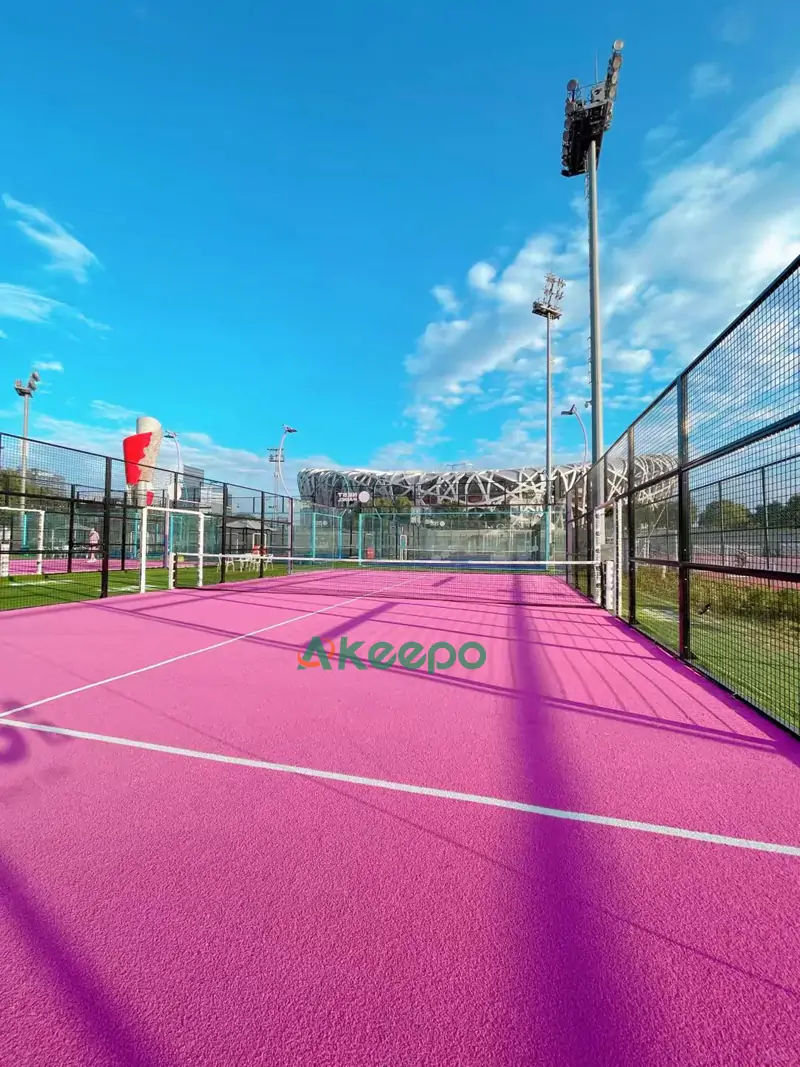
4. Compare Fiber Quality and Density
Fiber quality affects how turf responds to repeated foot traffic and how well it retains its intended characteristics over time.
When reviewing a product datasheet, pay attention to the following specifications.
Fiber material: Polyethylene and polypropylene are used in different synthetic turf products. Their suitability depends on the fiber design and intended application.
Dtex: This measurement indicates the mass of yarn per 10,000 metres. It helps buyers compare yarn specifications, but a higher Dtex value does not automatically mean better overall performance.
Stitch density: The number of stitches per square metre can help indicate how densely the turf is constructed. It should be evaluated alongside yarn weight, gauge, pile height, and backing.
Backing system: A stable backing helps maintain the dimensions of the turf and supports secure installation.
UV resistance: For outdoor courts, resistance to ultraviolet exposure is especially important for colour retention and material durability.
Instead of choosing a product based on a single specification, compare the complete technical datasheet and ask the supplier to explain how the specifications suit your expected court usage.
5. Select the Right Sand Infill
Sand infill is an important component of many padel turf systems. It helps stabilize the fibers and contributes to the intended ball response and player movement.
The correct sand type and quantity depend on the turf design. Buyers should confirm the following details before installation:
-
Recommended sand material and particle-size distribution.
-
Required infill quantity per square metre.
-
Compatibility with the selected turf.
-
Installation and brushing procedures.
-
Inspection and replenishment requirements.
Use the infill material specified by the turf manufacturer. Sand that is unsuitable, contaminated, or incorrectly distributed can affect surface consistency and maintenance requirements.
During installation, the infill should be distributed evenly according to the product instructions. Routine brushing and inspection help prevent uneven accumulation and exposed areas.
6. Consider Indoor and Outdoor Playing Conditions
The location of your court plays an important role in turf selection.
Indoor Padel Court
An indoor padel court is generally protected from direct rainfall and much of the weather-related exposure experienced by outdoor facilities. However, indoor turf still needs to withstand frequent play, repeated foot traffic, and the expected maintenance schedule.
For indoor projects, consider:
-
Expected daily playing hours.
-
Ventilation and indoor temperature conditions.
-
The preferred playing characteristics.
-
Cleaning and maintenance access.
-
Compatibility with the planned court base.
Outdoor Padel Court
Outdoor courts face additional challenges, including sunlight, rain, dust, and temperature changes. Turf and backing should be selected with the site's environmental conditions in mind.
For outdoor projects, consider:
-
UV resistance and colour stability.
-
Drainage performance.
-
Weather exposure.
-
Base preparation and surface gradients.
-
Sand distribution and cleaning requirements.
For projects in hot climates, including parts of the Middle East, it is also sensible to assess surface temperature, direct sunlight exposure, and the practicality of routine maintenance.
The best solution is one that matches the actual site conditions rather than relying on a universal specification.
7. Do Not Overlook the Padel Court Foundation and Drainage
Even high-quality turf may perform poorly if it is installed over an unsuitable base.
A properly planned padel court foundation helps provide a stable, level surface for the turf system and supports consistent playing conditions. Poor preparation can contribute to uneven areas, drainage problems, and premature surface damage.
Before installation, assess:
Ground stability: The base must be designed for the site's ground conditions and project requirements.
Surface level: Appropriate levelling supports consistent ball behaviour and secure turf installation.
Drainage: Outdoor courts need a drainage strategy suited to local rainfall, soil conditions, and the selected base design.
Installation tolerances: The base should meet the requirements of the court and turf system.
Site coordination: Electrical services, court structure installation, and drainage should be considered during the planning stage.
Akeepo encourages project owners to consider the foundation, turf, and drainage as connected parts of the overall court system.
8. Coordinate Turf with Court Design and Lighting
Turf selection should be part of the overall court design process, not an isolated purchasing decision.
For a panoramic padel court, the visual presentation of the playing surface can complement the transparent glass panels and open viewing experience. Turf colour, seam placement, and the quality of installation all contribute to the finished appearance.
Padel court lighting is another important consideration. Properly planned lighting helps provide visibility during evening play and supports a more comfortable playing environment. The lighting layout should be coordinated with the court structure to minimize distracting shadows and glare.
When planning a complete facility, review:
-
Turf colour and visual contrast.
-
Court orientation and surrounding structures.
-
Lighting position and uniformity.
-
Drainage and maintenance access.
-
Player movement and spectator visibility.
For commercial clubs, a coordinated design can help create a consistent experience across multiple courts.
9. Compare Suppliers Beyond the Initial Price
The cheapest turf quotation is not necessarily the most economical long-term option.
Before making a purchasing decision, ask suppliers to provide:
-
A detailed technical datasheet.
-
Information about fiber material, pile height, density, and backing.
-
Recommended sand type and infill quantity.
-
Drainage and outdoor-use specifications, where applicable.
-
Installation instructions and maintenance recommendations.
-
Warranty terms and exclusions.
-
Samples or photographs of completed projects, where available.
-
A clear breakdown of product, shipping, and installation costs.
You should also check whether the supplier can coordinate the turf with the court structure, glass, lighting, and foundation requirements.
Working with an experienced custom padel court manufacturer can make project coordination easier, particularly when the installation involves multiple components and different site conditions.
Akeepo focuses on helping project owners evaluate their requirements and select suitable court solutions. The specific turf specifications, available customization options, and scope of installation support should be confirmed for each project.
10. Common Mistakes to Avoid When Choosing Padel Turf
Avoid these common purchasing mistakes:
Choosing based on price alone. A lower initial price may not reflect the full cost of installation, maintenance, or replacement.
Assuming all artificial grass is suitable for padel. Sports-specific turf should be selected for the movement and playing characteristics of padel.
Ignoring the infill requirements. Incorrect sand selection or distribution can affect the intended surface response.
Overlooking the foundation. Uneven or poorly drained bases can undermine the performance of the finished surface.
Ignoring climate conditions. Outdoor projects need appropriate consideration of UV exposure, drainage, and temperature.
Failing to plan maintenance. Even a well-specified surface requires regular inspection and care.
A clear specification and a coordinated installation plan can help reduce these risks.
11. How Akeepo Can Help with Your Padel Court Project
Choosing the right artificial turf is only one part of building a successful padel facility. The surface must work with the foundation, court structure, lighting, and intended usage.
Akeepo recommends starting with a clear understanding of your project:
-
Is the court intended for indoor or outdoor use?
-
Will it serve a private facility, hotel, sports club, or commercial venue?
-
How frequently will the court be used?
-
What are the site's climate and drainage conditions?
-
Do you need a complete court solution or only the turf?
-
What are your budget, delivery, and installation requirements?
With these details, you can compare suitable specifications and discuss the appropriate solution for your project.
Whether you are planning a single court or a larger sports facility, a well-matched turf system can contribute to consistent playing conditions, manageable maintenance, and a professional finished court.
Contact Akeepo to discuss your padel court requirements and request product specifications for your project.
Frequently Asked Questions
What is the best artificial turf for a padel court?
The best option depends on the intended playing level, fiber structure, pile height, infill, backing, climate, and maintenance requirements. Compare complete product specifications rather than selecting turf based on pile height alone.
What pile height is commonly used for padel turf?
Commercial padel turf is commonly available in configurations around 10–12 mm. The appropriate choice depends on the complete turf system and the manufacturer's recommendations.
Is indoor padel turf different from outdoor padel turf?
Both must support suitable playing characteristics and repeated foot traffic. Outdoor systems require particular attention to UV resistance, drainage, and weather exposure, while indoor systems should be matched to usage intensity and facility conditions.
Does the foundation affect artificial turf performance?
Yes. A stable, level base and an appropriate drainage strategy help support consistent playing conditions and reliable installation.
How can I compare padel turf suppliers?
Review the technical datasheet, fiber specifications, backing, infill recommendations, warranty, installation requirements, and total project costs. Samples and documented project references can also help with evaluation.
Can Akeepo help with a complete padel court project?
Contact Akeepo with your project location, court type, preferred specifications, and installation requirements to confirm the available products and scope of support.
Plan Your Padel Court with Akeepo
The right artificial turf should be selected as part of a complete court solution. By evaluating the surface, foundation, drainage, lighting, and expected usage together, project owners can make more informed decisions and create a court suited to their needs.
Contact Akeepo to discuss your project and request a tailored quotation.
Back to News Start Your ProjectRecommended Products